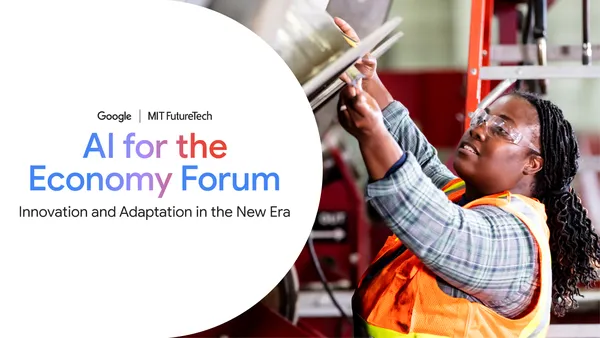

Google and MIT FutureTech just held their first AI for the Economy Forum in Washington D.C. The premise is refreshingly honest: the benefits and risks of AI are not automatic. We as a society get to shape how this plays out. That’s a lot more realistic than the typical “AI will save us all” or “AI will destroy everything” narratives.
James Manyika, Google’s SVP of Research, Labs, Technology & Society, announced two big commitments: more research funding to help governments and companies make informed decisions, and training programs to give workers the skills they need. On paper, this sounds great. In practice, I’ve seen too many similar initiatives fizzle out after the press release goes stale.
The research side: who’s asking the right questions?
Google’s AI & Economy Research Program is bringing in heavy hitters. Nobel Laureate Michael Spence, Cambridge’s Dame Diane Coyle, and former PIMCO CEO Mohamed El-Erian are advising. The Visiting Fellows program includes MIT’s David Autor, who actually studies labor markets and has been skeptical of techno-optimism. That’s a good sign.
They’re funding work on things like how firms can use AI to reduce drudgery, promote learning, and foster collaboration. The research from MIT’s Ben Armstrong and Julia Shah found that the most successful AI deployments are the ones that make work less miserable, not the ones that replace people entirely. Shocking, right? But this kind of evidence-based approach is exactly what’s missing from most corporate AI strategies.
Google.org is also funding a global cohort of research institutions looking at AI’s impact on labor markets, manufacturing, healthcare, and policy environments. They’re even studying the economics of AI agents, which feels like a topic that’s going to be massively important but barely discussed outside academic circles.
Training: the part that actually matters
The training piece is where Google is putting real money behind its words. They’re funding programs to train healthcare workers and create apprenticeships in high-demand fields. This is higher than I expected, honestly. Most tech companies talk about “reskilling” but don’t actually do it at scale.
But here’s the thing: training programs only work if the jobs actually exist on the other end. AI is going to automate some roles, augment others, and create entirely new ones. The question nobody has answered yet is whether the new jobs will pay as well as the old ones. If you’re training someone to be a prompt engineer for $40k/year when they used to make $80k as a data entry specialist, that’s not progress.
The elephant in the room
What the forum didn’t address directly is the timing mismatch. AI adoption is moving at internet speed. Government policy moves at legislative speed. Research takes years to produce meaningful results. By the time we have good data on what’s happening, the horse may have already left the barn.
Google’s approach is better than most, but I’d like to see more concrete commitments. How many workers will actually get trained? What’s the timeline for the research to be published? Will the findings be truly independent, or will they be filtered through Google’s PR lens?
Bottom line
This forum is a step in the right direction. Google is using its resources and influence to push for a more thoughtful conversation about AI and the economy. The involvement of serious economists like Autor and Spence gives me some hope. But I’ve been around long enough to know that forums and research programs are easy. Real change requires sustained effort, political will, and a willingness to admit when things aren’t working.
I’ll be watching to see if any of this translates into actual policy recommendations or worker outcomes. Until then, it’s a good conversation starter, but not a solution.
Comments (0)
Login Log in to comment.
Be the first to comment!