
The World Press Photo competition just handed its top prize to Carol Guzy for a shot called “Separated by ICE.” It’s a gut-punch of an image — kids clinging to their dad after an immigration hearing. No AI trickery, no generative fill, no “enhance” button magic. Just a photographer being in the right (or wrong) place at the right time with good instincts.
I’ve been watching how these contests handle the AI question for a while now. Most photo awards have scrambled to add some kind of AI policy, usually a vague paragraph about “authenticity” that leaves plenty of loopholes. World Press Photo went further. They set specific rules about what counts as a photograph — and what doesn’t.
The organization behind the award is independent and nonprofit, which gives them more freedom to draw hard lines. No generative AI additions. No synthetic elements. You can still do basic color correction and cropping, but the moment you ask an AI to fill in a background or remove a distracting element, you’re out.
This is higher than I expected from a major competition. Most of them are still trying to have it both ways — embrace the “creative possibilities” of AI while pretending the documentary category is somehow immune. World Press Photo just said: this is photojournalism, and this is what we require.
Carol Guzy’s winning image is a good example of why these rules matter. The power of that photo comes from knowing it’s real. Those kids were actually there. That father was actually gripping them. The tension in the frame isn’t composed by an algorithm — it’s composed by circumstance and a photographer who knew how to capture it.
If the same scene had been generated or even just heavily AI-augmented, the emotional weight would evaporate. You’d look at it and wonder what was real, then shrug because it doesn’t matter. That’s the problem with AI in photojournalism: it turns every image into a question instead of a statement.
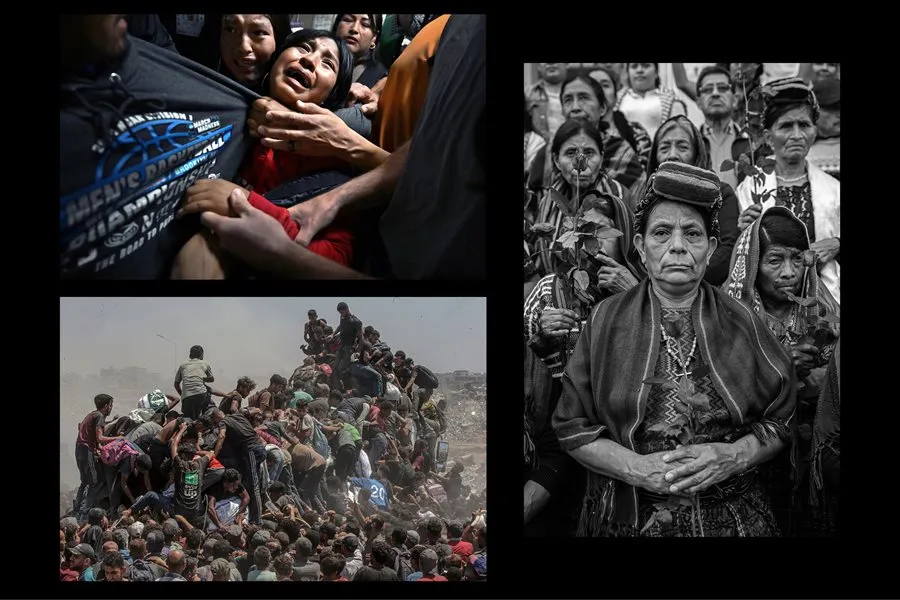
The contest also released the full set of finalists, and you can see the same principle running through all of them. These are photos that rely on human presence — being somewhere dangerous, uncomfortable, or emotionally charged with a camera and the patience to wait for the right moment.
I’ve seen some grumbling online about the rules being too restrictive. The argument usually goes something like: “AI is just another tool, why limit creativity?” But photojournalism isn’t about creativity in the artistic sense. It’s about documentation. If you want to make art with generative AI, go submit to an art competition. This one is for people who actually show up.
The 2026 results feel like a line in the sand. Other contests will probably follow, or they’ll keep diluting their standards until nobody trusts their awards anymore. World Press Photo chose the harder path, and I respect that.
For now, the answer to “what is a photo?” is clear: it’s something a human captured with a camera, not something a machine made up.
Comments (0)
Login Log in to comment.
Be the first to comment!