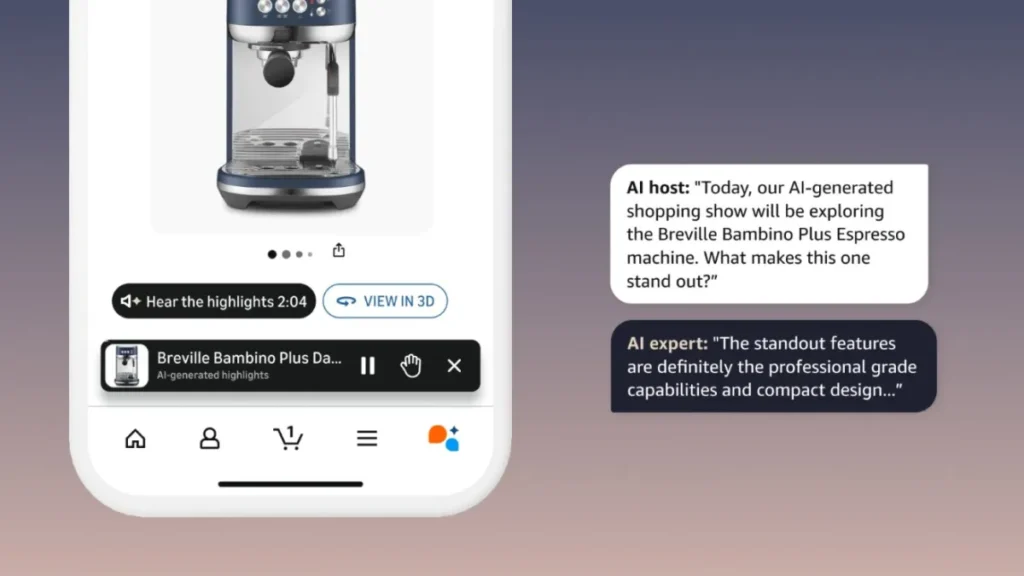

Amazon just added something new to product pages: voice. The feature, called “Join the Chat,” is exactly what it sounds like. You ask a question about a product, and an AI generates an audio response. No typing, no scrolling through reviews. Just talk, listen, and move on.
I’ve been testing this for a few days, and I have mixed feelings. On one hand, it’s genuinely convenient for quick queries. “Does this fit a queen-sized bed?” “Is the battery removable?” The AI answers in a natural, conversational tone, not the robotic monotone you’d expect. On the other hand, it feels like a solution in search of a problem. Product pages already have specs, Q&A sections, and reviews. Do we really need someone talking at us?
Amazon says the feature uses a custom large language model trained on product data and customer feedback. The responses are short, usually under 30 seconds, and they pull from verified sources like manufacturer details and top-rated reviews. That’s smart. It means the AI isn’t making stuff up out of thin air, which is more than I can say for some other AI shopping tools I’ve tested.
But here’s the catch: the feature is opt-in. Sellers have to enable it, and not all products are supported yet. I found it active on electronics and home goods, but not on books or clothing. So it’s still a beta in practice, even if Amazon isn’t calling it that.
The interface is clean. On a product page, you’ll see a small “Join the Chat” button near the buy box. Tap it, and a pop-up appears with a microphone icon. Ask your question, and the AI responds in a few seconds. You can also type if you’re in a noisy environment or just prefer not to talk to your phone in public. The audio plays automatically, but you can pause or replay it.
What surprised me is how good the voice synthesis is. It’s not quite human, but it’s close enough that I forgot I was talking to a machine after the first couple of exchanges. The pacing is natural, with appropriate pauses and emphasis. Amazon has been working on neural text-to-speech for years, and it shows.
That said, there are downsides. The AI sometimes gives vague answers. I asked a camera’s low-light performance, and it said “it performs well in low light” without any specifics. That’s not helpful. I also noticed it struggles with subjective questions like “Is this comfortable?” or “Does it look cheap?” The AI defaults to generic manufacturer claims, which defeats the purpose of asking a real person.
Privacy is another concern. Amazon says audio recordings are processed and deleted after the response is generated, but the company’s track record with data handling doesn’t inspire blind trust. If you’re paranoid about your shopping queries being recorded, you can stick to typing. But then, what’s the point of a voice feature?
I think this will be useful for certain types of shoppers. People who are visually impaired, those who prefer audio over text, or anyone shopping hands-free while cooking or driving (safely, please) will appreciate it. For the rest of us, it’s a neat gimmick that might become a habit over time.
Amazon is clearly betting on voice as the next frontier of e-commerce. Alexa already lets you order stuff by shouting at a speaker. Now they want you to ask questions before you buy. It makes sense. Voice is faster than typing, and audio can convey nuance that text can’t. But whether shoppers actually want to chat with their product pages remains to be seen.
I’ll keep using it and see if it improves. Right now, it’s a solid first attempt with room to grow. If Amazon can make the answers more detailed and reduce the vagueness, this could actually replace the Q&A section entirely. Until then, I’ll keep reading reviews like a normal person.
Comments (0)
Login Log in to comment.
Be the first to comment!