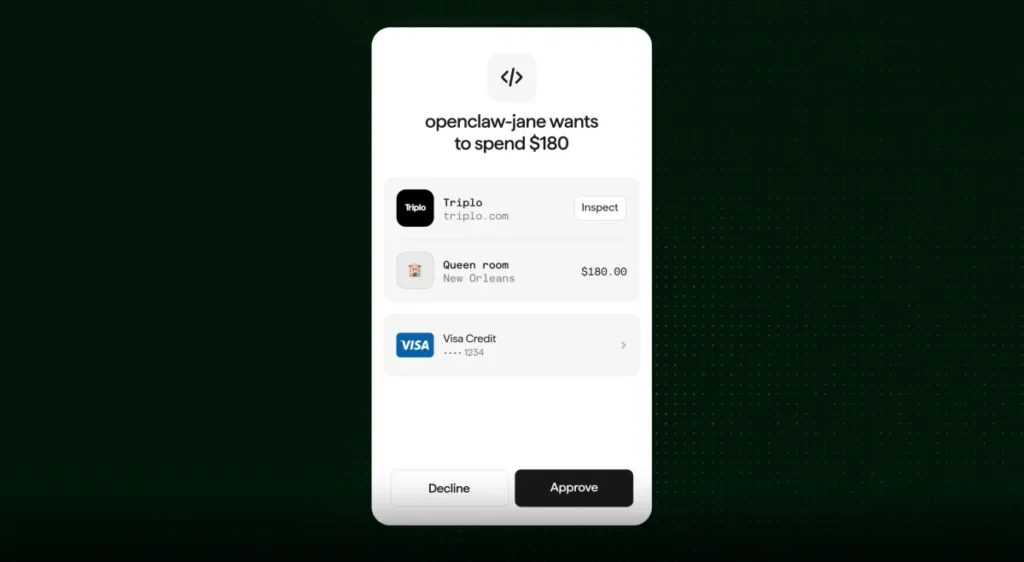

Stripe just made its Link wallet a lot more interesting. If you’ve used Link before, you know it’s basically a faster checkout — store your cards, bank accounts, and subscriptions, and breeze through payments without retyping everything. Fine for humans. But now Stripe is letting AI agents use it too.
That’s the bit that caught my attention. The idea is simple: you authorize an AI agent — think a travel planner, a personal assistant bot, or a procurement agent — to spend money through Link on your behalf. The agent can initiate payments, but you stay in control via approval flows. You set limits, approve or deny requests, and review what happened.
This isn’t Stripe’s first rodeo with AI. They’ve been quietly building infrastructure for agent-to-human payments for a while. But Link feels like the most practical application so far. Why? Because it solves a real pain point: how do you let an AI spend money without giving it the keys to the kingdom?
Most approaches today are either too risky (give the agent an API key with spending power) or too annoying (require manual approval for every single transaction). Stripe’s middle ground — Link with configurable approval flows — is actually well thought out. You can set spending caps, require approval above a threshold, and even get real-time notifications. The agent can book your flight, order office supplies, or pay a subscription, but you stay in the loop.
I’ve seen a few demos of this in action. One example: a small business owner uses an AI agent to manage recurring SaaS subscriptions. The agent checks usage, cancels underused tools, and pays for renewals — all through Link. The owner gets a weekly digest of transactions and can override anything. It’s not revolutionary tech, but it’s a solid workflow.
Of course, the big question is trust. How many people are comfortable letting an AI spend their money, even with guardrails? Stripe is betting that controlled approval flows are enough. I’m not so sure. The risk isn’t just a rogue agent buying crypto — it’s the subtle stuff. An agent that misreads a subscription renewal date and pays twice. An agent that interprets “order more paper” as 500 reams instead of five. The approval flow helps, but it still relies on the human to actually review things.
Stripe’s documentation is refreshingly clear about this. They recommend setting low default limits and requiring manual approval for anything above $50 or so. But let’s be real: if you’re approving every transaction, you’ve basically turned the agent into a glorified shopping cart. The whole point of autonomy is that you don’t have to micromanage.
Still, this is a step in the right direction. Agent commerce is coming — whether we like it or not. Stripe is positioning itself as the payment rail for that future, and Link is a pragmatic starting point. It’s not flashy, but it works. And in a world of overhyped AI demos, that’s refreshing.
Comments (0)
Login Log in to comment.
Be the first to comment!