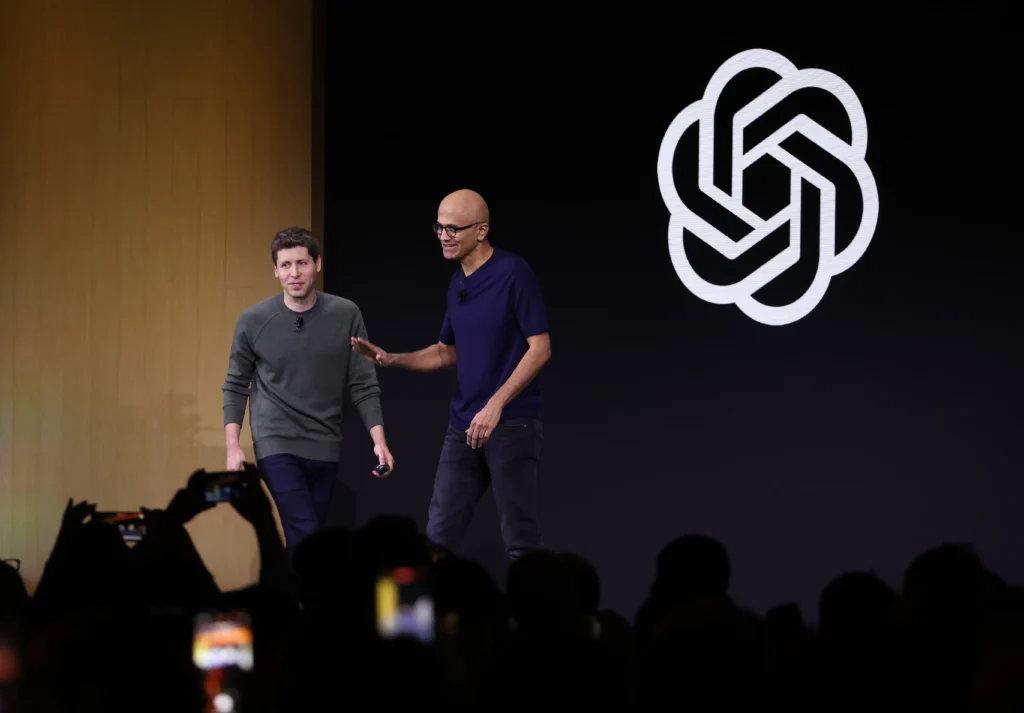

I’ve been watching the Microsoft-OpenAI relationship for years now, and honestly, I expected it to end in a messy public spat. The partnership had all the hallmarks of a toxic situationship: executive disagreements, contract renegotiations, and constant friction over who gets to build what infrastructure.
But against all odds, they pulled off a clean divorce this week. Microsoft announced on Monday that it’s rewriting the terms of its long-standing deal with OpenAI. The biggest change? OpenAI can now offer its products and services through any cloud provider, not just Microsoft’s Azure. That’s a massive shift from the earlier arrangement where OpenAI was effectively locked into Microsoft’s ecosystem.
A day later, OpenAI followed up with its own statement, and the tone from both sides was… polite. No passive-aggressive jabs, no “we wish them well” with air quotes. Just a straightforward acknowledgment that the relationship had run its course in its current form.
Let me break down what actually changed. Under the old deal, Microsoft had exclusive rights to commercialize OpenAI’s models through Azure. OpenAI could run its own API and consumer products like ChatGPT, but if you wanted to build a business on GPT-4, you were going through Microsoft. That exclusivity is gone now. OpenAI can sell access to its models on AWS, Google Cloud, or anyone else who wants to play.
Microsoft isn’t walking away empty-handed though. They still have a revenue-sharing agreement and a seat at the table for certain strategic decisions. But the days of Microsoft being OpenAI’s exclusive cloud sugar daddy are over.
What drove this split? Infrastructure, mostly. OpenAI’s compute needs have grown faster than anyone predicted, and Microsoft couldn’t keep up fast enough. When you’re training models that cost hundreds of millions of dollars per run, you can’t afford to be stuck with one supplier. OpenAI needed flexibility, and Microsoft wanted to stop being the sole investor footing the bill for a company that was increasingly competing with its own AI efforts.
There’s also the uncomfortable fact that Microsoft and OpenAI were becoming direct competitors. Microsoft is shoving Copilot into everything from Office to Windows, while OpenAI keeps pushing ChatGPT into enterprise territory. At some point, the partnership becomes a conflict of interest.
I think this is ultimately a smart move for both companies. Microsoft gets to focus on building its own AI stack without the awkwardness of having a major investor relationship with a competitor. OpenAI gets the freedom to scale without being tethered to one cloud provider’s capacity constraints.
The real question is what happens to the AI market now. OpenAI being cloud-agnostic means we might see more competition on pricing and features across AWS, Google Cloud, and Azure. That’s good for developers and businesses who want to build on top of these models without being locked into a specific ecosystem.
Don’t expect this to be the last restructuring. The AI industry moves too fast for any partnership to stay static for long. But for now, Microsoft and OpenAI have shown that you can end a complicated relationship without burning everything down. That’s rare in tech, and I’ll give credit where it’s due.
Comments (0)
Login Log in to comment.
Be the first to comment!