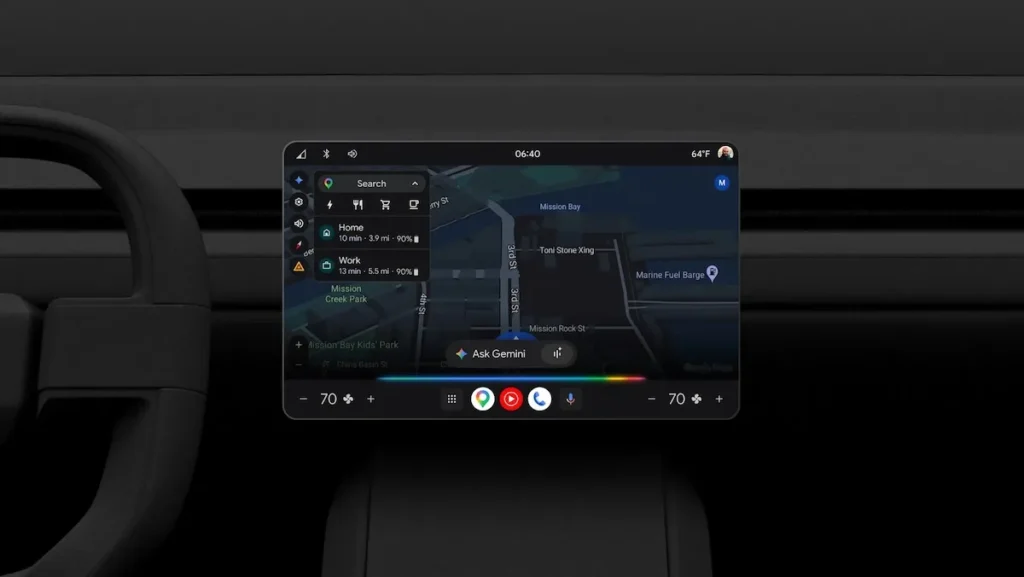

Google just announced that its Gemini AI assistant is heading to millions of cars, starting with models from Mercedes-Benz, Ford, and a few others I can’t get excited about. The idea is straightforward: instead of the usual robotic “OK, navigating to…” responses, you get a conversational AI that can handle more complex requests, like “Find a coffee shop with free Wi-Fi and good reviews” or “What’s the best route to avoid traffic on the way to the airport?”
On paper, this sounds like a natural evolution. Google Assistant has been in cars for years, and it’s fine for basic stuff—calls, texts, navigation. But let’s be honest, it’s not exactly a thrill. Gemini promises to change that by understanding context better, remembering past conversations, and even generating responses that don’t sound like they’re reading from a script.
But here’s the thing: I’ve been burned by AI assistants before. They promise the moon and deliver a half-baked chatbot that can’t tell the difference between “Take me to the nearest gas station” and “I need a mechanic.” Gemini might be smarter, but it’s still early days. Google’s track record with rolling out features into cars isn’t stellar—remember when Android Auto was buggy for months after launch?
The integration will use Google’s Automotive AI Agent, which is basically Gemini optimized for the car’s environment. It can handle multi-step tasks, like booking a table at a restaurant while navigating, or adjusting the climate based on your calendar. That’s genuinely useful, if it works. But I’m skeptical about how much of this will actually function without hiccups. Cars are not phones—they have limited connectivity, safety constraints, and users who are already distracted enough.
Google claims the assistant will work offline for some tasks, using on-device processing. That’s smart, because nobody wants to lose navigation because they drove through a dead zone. But the really fancy stuff—like generating a summary of your day’s events or suggesting a playlist based on your mood—will require a data connection. That’s fine, but it also means your car is now another device slurping up your data. Google says it’s privacy-focused, but I’ll believe that when I see it.
The rollout starts later this year, with a focus on premium models first. So if you’re driving a 2018 Corolla, don’t hold your breath. Google is clearly targeting the high-end market to prove the tech works, then scaling down. That’s a common strategy, but it also means most people won’t touch this for another two or three years.
I’ll be curious to see if this actually makes driving better or just adds another layer of complexity. The best in-car assistants are invisible—they do their job without making you think about them. Gemini, with its flashy conversational skills, risks being the opposite: a distraction wrapped in a gimmick. But if Google nails the execution, it could set a new standard for what we expect from our cars. For now, I’m cautiously optimistic, but I’m not clearing my schedule for a test drive just yet.
Comments (0)
Login Log in to comment.
Be the first to comment!