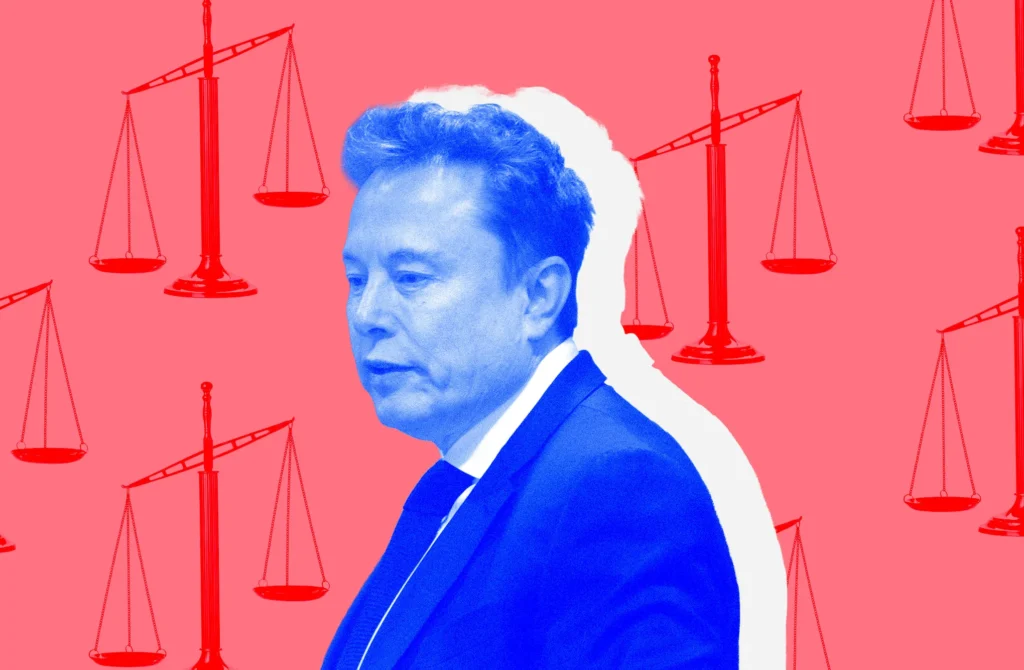

Elon Musk was on the stand in a California federal courtroom on Thursday, and he let something slip that makes his lawsuit against OpenAI look a little awkward.
He admitted that his own AI startup, xAI, used OpenAI’s models to train Grok.
The technique in question is model distillation. It’s a common practice where a larger, more capable model acts as a teacher, passing knowledge down to a smaller student model. Companies do this internally all the time. But it’s also how smaller labs try to catch up to bigger competitors without doing all the heavy lifting from scratch.
When the prosecutor asked Musk if he knew what model distillation was, he said yes. And then he confirmed xAI had done it with OpenAI’s models.
Look, I get it. Distillation is standard in the industry. Everyone from Meta to Google does it in some form. But the irony here is thick. Musk’s whole lawsuit against OpenAI is built on the idea that the company betrayed its nonprofit roots by keeping its models closed and profit-driven. Now he’s admitting that his own company piggybacked on those very models to build a competitor.
The timing couldn’t be worse for Musk. He’s been running a public campaign against OpenAI, calling them out for being secretive and abandoning their mission. Meanwhile, xAI was quietly using OpenAI’s work to train Grok. That’s not illegal—most AI companies do this—but it sure makes the moral high ground look shaky.
What I find interesting is the sheer scale of it. xAI is not some garage operation. It’s raised billions and has access to some of the best hardware and talent in the world. Yet they still found it easier to distill from OpenAI than to train Grok entirely from scratch. That tells you something about how far ahead OpenAI’s models actually are.
Musk’s testimony didn’t stop there. He also argued that distillation is a legitimate way to improve model performance, which is true. But the problem is that OpenAI’s terms of service explicitly prohibit using their outputs to train competing models. So xAI likely violated those terms. Whether that holds up in court is another question, but it’s not a good look.
The whole thing feels like a classic Silicon Valley move: sue the big guy while quietly using their stuff. I’ve seen this play out before in other tech battles. The difference here is that Musk built his entire narrative around being the open-source savior. Now that narrative has a giant hole in it.
I’m curious to see how this affects the case. The judge didn’t seem thrilled when Musk confirmed the distillation. And OpenAI’s lawyers are probably already drafting motions to use this admission against him.
For the rest of us, it’s just another reminder that in the AI world, everyone is copying everyone else. The line between inspiration and theft is blurrier than any courtroom can define.
Comments (0)
Login Log in to comment.
Be the first to comment!