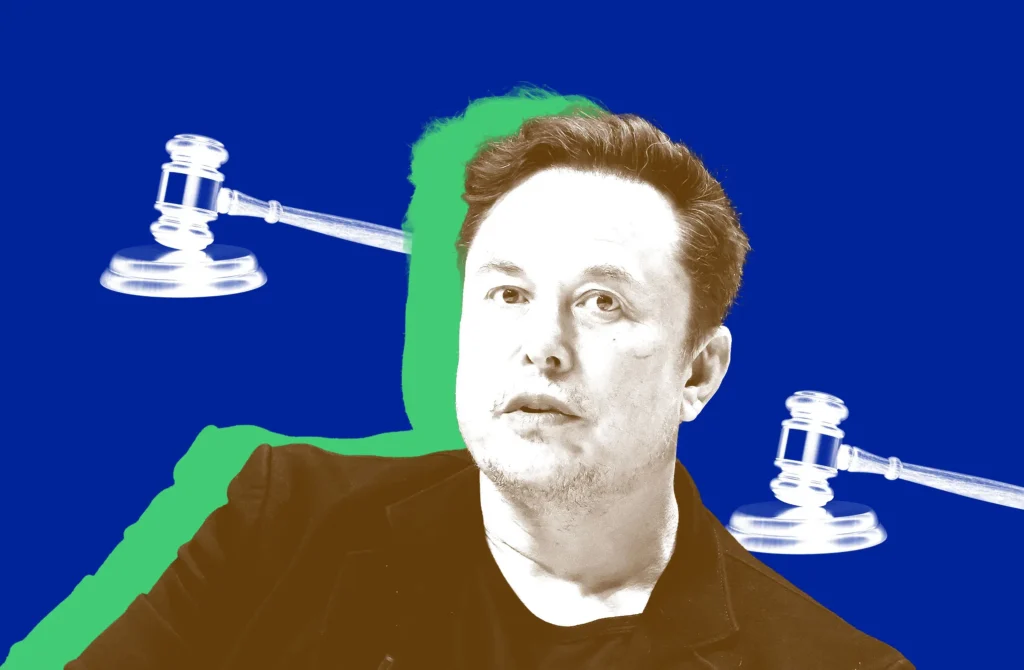

About five hours into Elon Musk’s testimony, I typed the following sentence into my notes: “I have never been more sympathetic to Sam Altman in my life.”
That’s not something I ever expected to write. But watching Musk on the stand in the OpenAI trial was a masterclass in self-sabotage.
His direct testimony was actually an improvement over the previous day — even if his lawyer kept feeding him leading questions like a parent prompting a kid at a spelling bee. But whatever goodwill he built evaporated the second cross-examination started.
For hours, Musk refused to answer yes-or-no questions with yes or no. He’d launch into tangents, dodge the actual question, and occasionally “forget” things he’d testified to just that morning. At one point he scolded defense lawyer William Savitt like a disappointed principal. I watched a few jury members glance at each other. During one particularly testy exchange, a woman on the jury looked like she was mentally calculating how much longer this would take.
This is a guy who built Tesla and SpaceX by being relentlessly persuasive. But in a courtroom, that same stubbornness turns into a liability. He can’t help but argue every point, even when the smart move is to shut up and answer the question.
The irony is thick. Musk sued OpenAI claiming they abandoned their nonprofit mission. But his own conduct on the stand made it hard to root for him. He came across as someone who genuinely believes the rules don’t apply to him — which might work in a boardroom, but not in front of a jury.
Savitt was methodical. He’d ask a simple question, Musk would ramble, and Savitt would calmly ask again until Musk either answered or looked evasive. The contrast was stark: a seasoned litigator doing his job vs. a billionaire who thinks he’s smarter than everyone in the room.
By the end of the day, I wasn’t thinking about OpenAI’s mission or the merits of the case. I was just glad I wasn’t on that jury. Because if I had to decide who was more credible after watching that performance, I know which way I’d lean — and it’s not the guy who treated cross-examination like a TED Talk he didn’t agree to give.
Comments (0)
Login Log in to comment.
Be the first to comment!