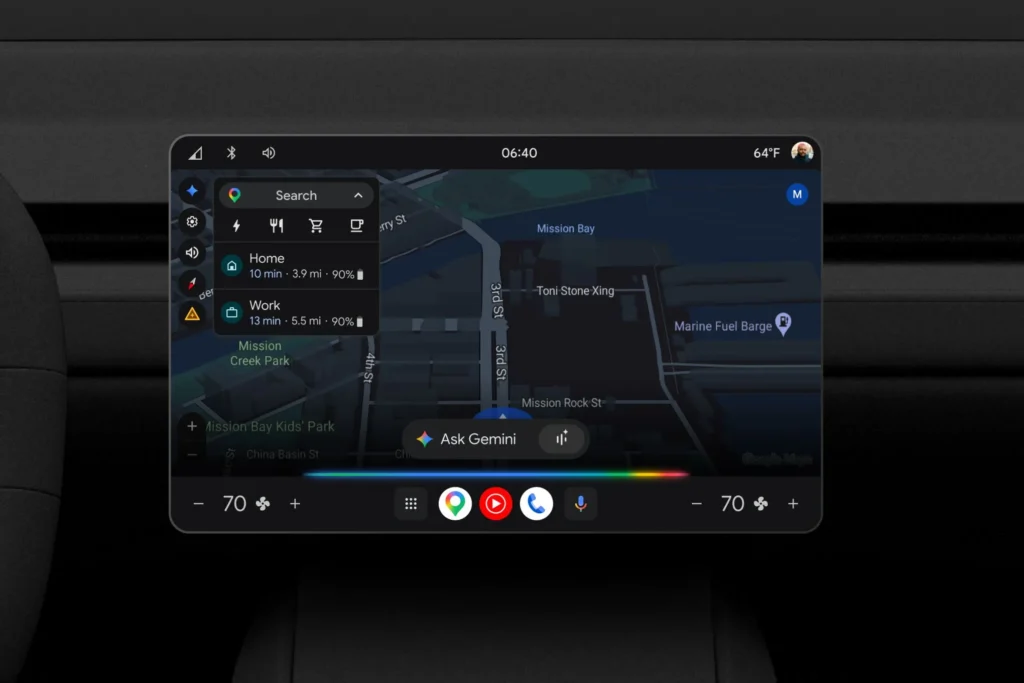

Google announced today that it’s rolling out Gemini to vehicles with Google built-in. If you’ve got one of those cars that shipped with Google’s automotive stack—usually seen in Volvo, Polestar, Renault, and some GM models—you’re getting an upgrade from the old Google Assistant to Gemini.
The promise, as laid out by Google senior product manager Alankar Agnihotri, is that “your car will get better over time.” That’s not just marketing fluff. Starting with this update, existing cars will receive Gemini through a software update, not just new vehicles rolling off the line. That’s a big deal if you bought a car three years ago and have been watching the infotainment system slowly become irrelevant.
What does Gemini actually do differently in a car? The core pitch is better natural conversation. You can say things like “I’m cold” instead of “set temperature to 72 degrees” and it’ll figure out what you mean. It also handles follow-up questions without needing to repeat context. If you ask “find the nearest EV charger” and then say “what about one with a CCS plug?”, it should keep the thread alive. That’s something the old Assistant was terrible at.
The vehicle-specific stuff is where it gets more interesting. Gemini can pull information about your car—range, tire pressure, maintenance schedules—and adjust settings like climate, seat heating, or driving modes. Google showed an example where you say “I’m stressed” and the car suggests switching to a calm driving mode. I’m not sure how much I’d use that, but the idea of not diving through menus for basic controls is appealing.
There’s also integration with Google Maps and other apps. You can ask Gemini to plan a road trip with charging stops, or to add a destination to your route mid-drive without fumbling with the screen. The assistant can also summarize messages or let you reply hands-free. Again, this is stuff the old Assistant could technically do, but it was clunky and often failed on complex requests.
Now, the elephant in the room: reliability. Google Assistant in cars has been hit or miss. Sometimes it works great, sometimes it completely misunderstands a simple command. Gemini is better at language understanding, but whether that translates to a consistently good experience depends on how well Google handles the noisy, low-bandwidth environment of a moving car. I’ll believe it when I see it in a real highway test.
The rollout starts later this year, and Google hasn’t given a specific date. If you own a compatible car, you’ll get an over-the-air update. No word on which exact models are first, but typically Volvo and Polestar get priority on Google’s automotive features.
Honestly, this is the kind of upgrade that makes the Google built-in approach more compelling. The hardware in your car doesn’t change, but the software can. If Gemini actually delivers on better voice control and vehicle integration, it could make the infotainment experience feel less like a laggy tablet and more like a smart assistant. That’s a big if, but I’m cautiously optimistic.
Comments (0)
Login Log in to comment.
Be the first to comment!