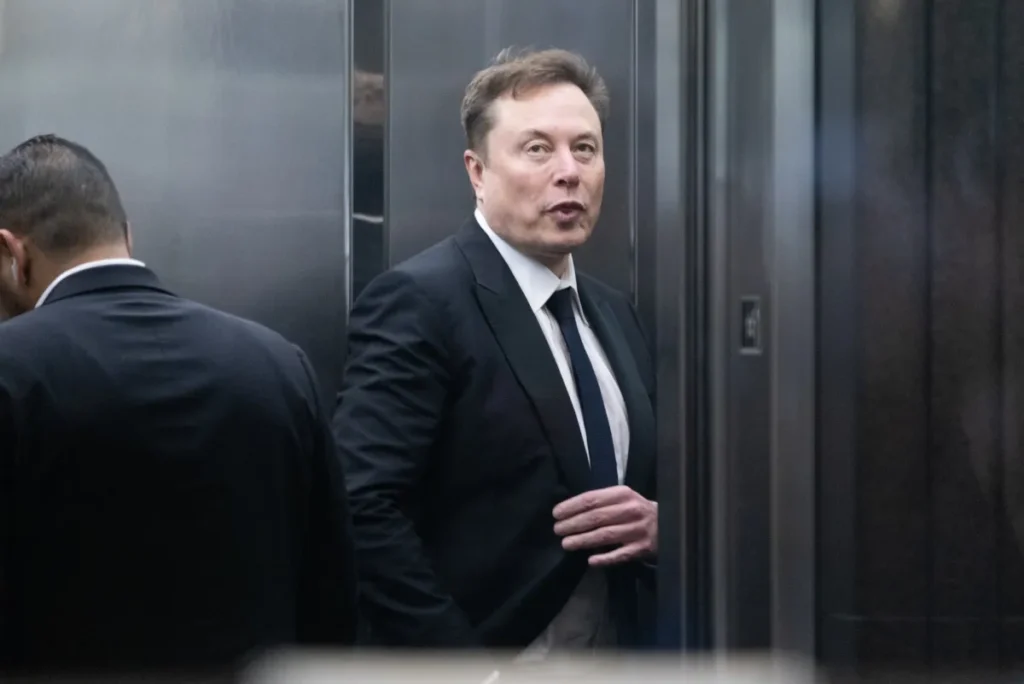

Elon Musk testified this week that xAI trained its Grok model on outputs from OpenAI’s models. That’s not a rumor or a leak — he said it under oath. And honestly, it’s one of those admissions that makes you pause and rethink the whole “open” vs. “closed” AI debate.
Let’s talk about distillation first, because that’s the buzzword everyone’s throwing around. Distillation is when you take a larger, more capable model (like GPT-4) and use its outputs to train a smaller, cheaper model (like Grok). It’s common practice in the industry — Anthropic does it, Google does it, even some open-source projects rely on it. But the catch is that most companies don’t openly admit to using a competitor’s model as the teacher. Especially not when you’re in the middle of a lawsuit accusing that competitor of being too closed.
Musk’s testimony came during the ongoing legal battle between xAI and OpenAI. The details are still murky, but what’s clear is that xAI didn’t just borrow a few ideas — they actively fed Grok with outputs from OpenAI’s models to improve its performance. Musk framed it as a standard technique, which it is, but the optics are terrible. Here’s a guy who’s been publicly criticizing OpenAI for being secretive and profit-driven, and it turns out his own company was leaning on their work to get Grok off the ground.
I’m not saying distillation is unethical per se. If you’re using publicly available outputs and you’re not violating terms of service, it’s a gray area that most of the industry navigates daily. But Musk’s position makes this particularly ironic. He’s spent years positioning himself as the champion of open-source, transparent AI, while OpenAI is the villain hoarding its tech. Now we find out xAI was essentially piggybacking on that same tech. It’s like a vegan chef getting caught sneaking bites of a burger.
The bigger issue here is what this means for the distillation arms race. Frontier labs like OpenAI, Google, and Anthropic are all trying to protect their models from being copied via distillation. They’ve added rate limits, watermarks, and legal threats to deter it. But if a well-funded company like xAI is doing it openly, what’s stopping smaller players? The genie is out of the bottle, and no amount of lawsuits will put it back.
Musk’s testimony also raises questions about Grok’s actual capabilities. If Grok was trained on OpenAI outputs, how much of its performance is genuinely original versus borrowed? I’ve tested Grok a few times, and it’s decent — but it’s not GPT-4 level. This might explain why: it’s a distilled version of a model that’s already been surpassed by newer iterations. Distillation can give you a good model, but it rarely gives you a great one unless you add significant innovation on top.
Let’s not pretend this is a one-sided story either. OpenAI has its own history of questionable practices — training on copyrighted data, scraping without permission, and being cagey about their training datasets. So if Musk is guilty of distillation, OpenAI is guilty of much the same, just at a larger scale. The difference is that OpenAI never claimed to be the white knight of AI ethics. Musk did.
What frustrates me is the lack of transparency from both sides. If distillation is going to be the norm, then companies should be upfront about it. Instead, we get legal battles, PR spin, and testimony that only surfaces when someone is forced to answer under oath. The whole thing feels like a tech soap opera, and we’re the audience stuck watching the drama instead of getting real progress.
At the end of the day, this admission doesn’t change the fact that Grok exists and people use it. But it does chip away at the narrative that xAI is somehow building something pure and independent. They’re playing the same game as everyone else — they just got caught with their hand in the cookie jar. And honestly, that’s fine. What’s not fine is pretending otherwise.
Comments (0)
Login Log in to comment.
Be the first to comment!