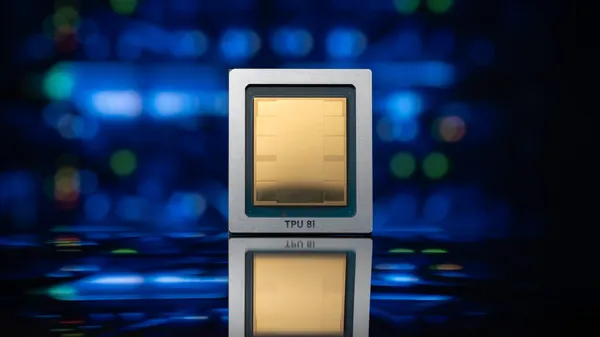

If you’ve used Google products today — Search, Gmail, YouTube, whatever — you’ve already leaned on a piece of custom silicon that most people have never heard of. It’s called a TPU, short for Tensor Processing Unit.
Google designed these chips from scratch more than ten years ago, with one goal: do math at absurd scale, as fast as possible. Because that’s what AI models are, under the hood — just a ridiculous amount of matrix multiplication.
The newest generation pushes that further than I expected. We’re talking 121 exaflops of compute power, with double the bandwidth of the previous generation. That’s not just a spec sheet bump; for anyone training large models, that kind of bandwidth improvement directly translates to faster training times and less time waiting on data movement.
I’ve seen a lot of custom AI hardware come and go over the years. Some of it was hype, some of it was genuinely useful but too niche. TPUs have stuck around because they solve a real bottleneck: moving data around is often the slowest part of AI workloads, not the actual math. By doubling bandwidth, Google is attacking that bottleneck head-on.
There’s a video floating around that goes into more detail about how these things work at the transistor level. It’s worth a watch if you’re into that kind of thing, but the short version is: tiny chips, massive math, and they’ve been quietly powering the AI you interact with every day.
No grand conclusions here. Just a reminder that the most impactful AI hardware is often the stuff you never see.
Comments (0)
Login Log in to comment.
Be the first to comment!