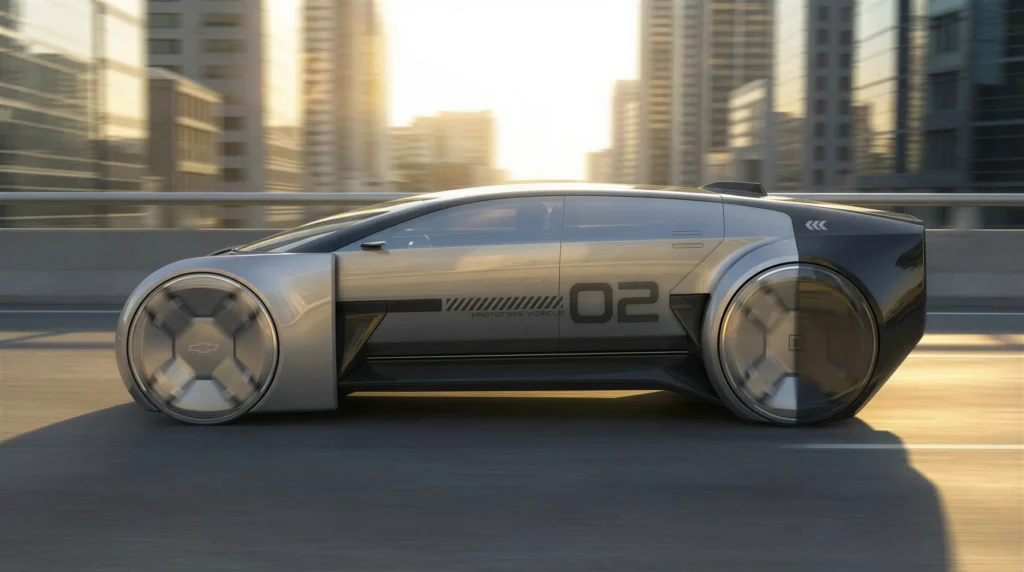

The auto industry has been flirting with digital tools for decades. We’ve had VR sculpting, 3D visualization suites, all sorts of fancy software. Yet most new cars still start life as a pencil sketch on paper.
Those sketches go through endless rounds of refinement. Designers tweak the front bumper, adjust the roofline, rework the side profile. Some iterations die in a digital folder. Others get turned into clay models, hand-sculpted by artisans who can feel the curve of a fender. That whole process—from first sketch to production-ready design—can easily take five or six years.
So the car you’re buying this summer? It was probably first drawn in 2020 or 2021, back when the world looked very different.
That timeline is starting to look like a liability. Generative AI can now take a rough sketch and generate dozens of high-fidelity 3D variations in minutes. Not just rough concept art, but fully surfaced models with realistic lighting and material properties. Some automakers are already feeding these outputs directly into their design review pipelines.
I’ve seen demos where a designer draws a vague silhouette, the AI fills in the details, and the result looks like something a human spent weeks perfecting. It’s not replacing the designer’s eye—it’s removing the grunt work of manual iteration.
The real shift isn’t speed, though. It’s the ability to explore far more design directions than any team could manage by hand. Instead of picking three sketches to develop, a studio can generate 300, then filter down to the most promising candidates. That changes the creative bottleneck from “how many can we refine” to “how well can we evaluate.”
Of course, there’s resistance. Clay modeling is an art form, and automakers have invested heavily in those workshops. But the economics are brutal. A single full-size clay model can cost six figures and take months to complete. AI-generated alternatives cost pennies and take hours.
I expect we’ll see the first production car with significant AI-designed body panels within two years. Not a concept car, not a one-off showpiece, but something you can actually buy. And honestly, I’m curious whether it’ll look like anything we’ve seen before, or whether the AI will push proportions and surfacing in genuinely new directions.
Comments (0)
Login Log in to comment.
Be the first to comment!